

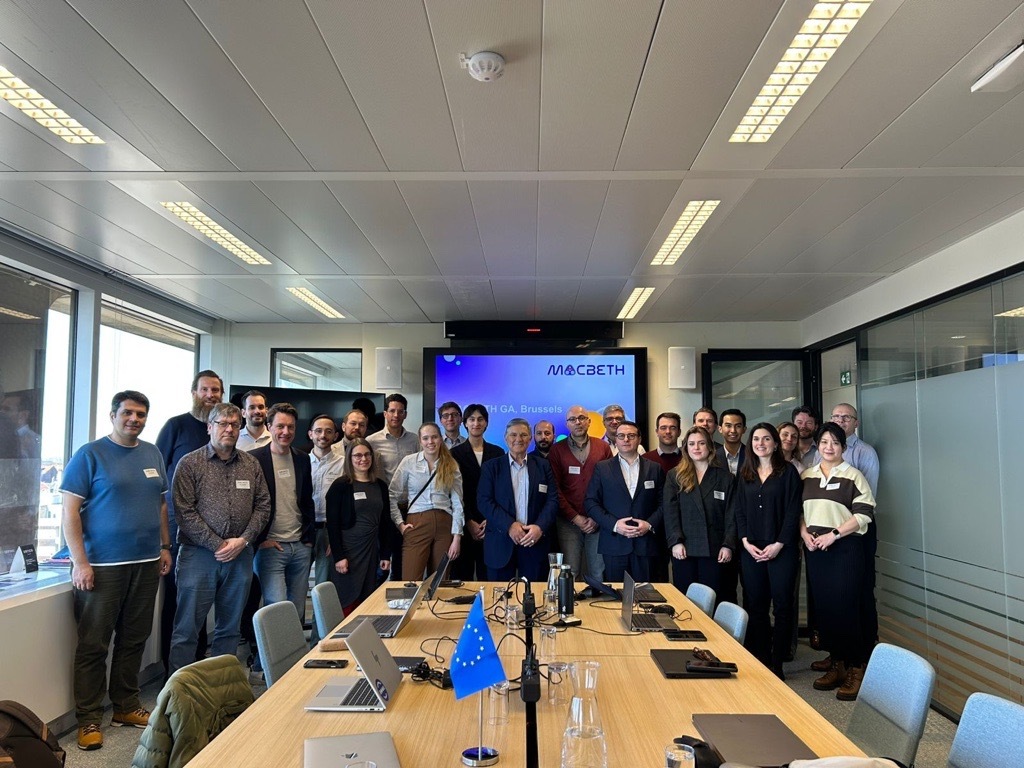
The MACBETH Project reached an important milestone with its first General Assembly, held over two days at the headquarters of ERTICO – ITS Europe in Brussels. The meeting brought together project partners to reflect on the progress achieved during the first year and to align on the next steps toward accelerating the deployment of Megawatt Charging Systems (MCS) for heavy-duty transport.
Building the foundations for MCS deployment
Year 1 of MACBETH has been largely dedicated to preparatory and foundational work. Partners have focused on developing the knowledge base, methodologies, and frameworks that will support upcoming pilot activities and ensure robust, scalable results.
Key discussions during the General Assembly highlighted the breadth of this work, including:
- Insights gathered from stakeholder interviews and their implications for both industry and research communities
- The clustering of system-level use cases and identification of key technical and operational requirements
- The development of a pilot evaluation framework, alongside defining data needs
- Analysis of heavy-duty vehicle energy consumption patterns
- Progress on a charging demand tool to support future charging site selection
- Specifications for interoperable and flexible multipoint MCS solutions
- Best practices for the design and operation of charging hubs
These discussions demonstrated the project’s strong systems-level approach, combining technical innovation with real-world applicability.
Advancing toward real-world implementation
A key focus of the meeting was the status and planning of MACBETH’s pilot sites in Belgium and Sweden. Partners reviewed progress to date, addressed open questions, and discussed the pathway toward implementation.
These pilot sites will play a crucial role in validating project outcomes and demonstrating how Megawatt Charging Systems can support the transition to zero-emission heavy-duty transport across Europe.
From preparation to activation
With the groundwork now firmly in place, MACBETH is entering a new phase. Year 2 will be an “activation year,” where pilot activities will move forward, tools and methodologies will be tested in real-world contexts, and tangible results will begin to emerge.
The consortium also plans to increase its presence at industry events, fostering collaboration and knowledge exchange with stakeholders across the mobility and energy ecosystems.
Coming up
The General Assembly not only marked the conclusion of the project’s first year but also reinforced the collaborative spirit that underpins MACBETH. Partners highlighted the value of sharing knowledge and experiences across countries and sectors, helping to build a common vision for the future of high-power charging.
With strong momentum and a clear direction, MACBETH continues its journey toward enabling efficient, interoperable, and scalable charging solutions for heavy-duty transport in Europe.