

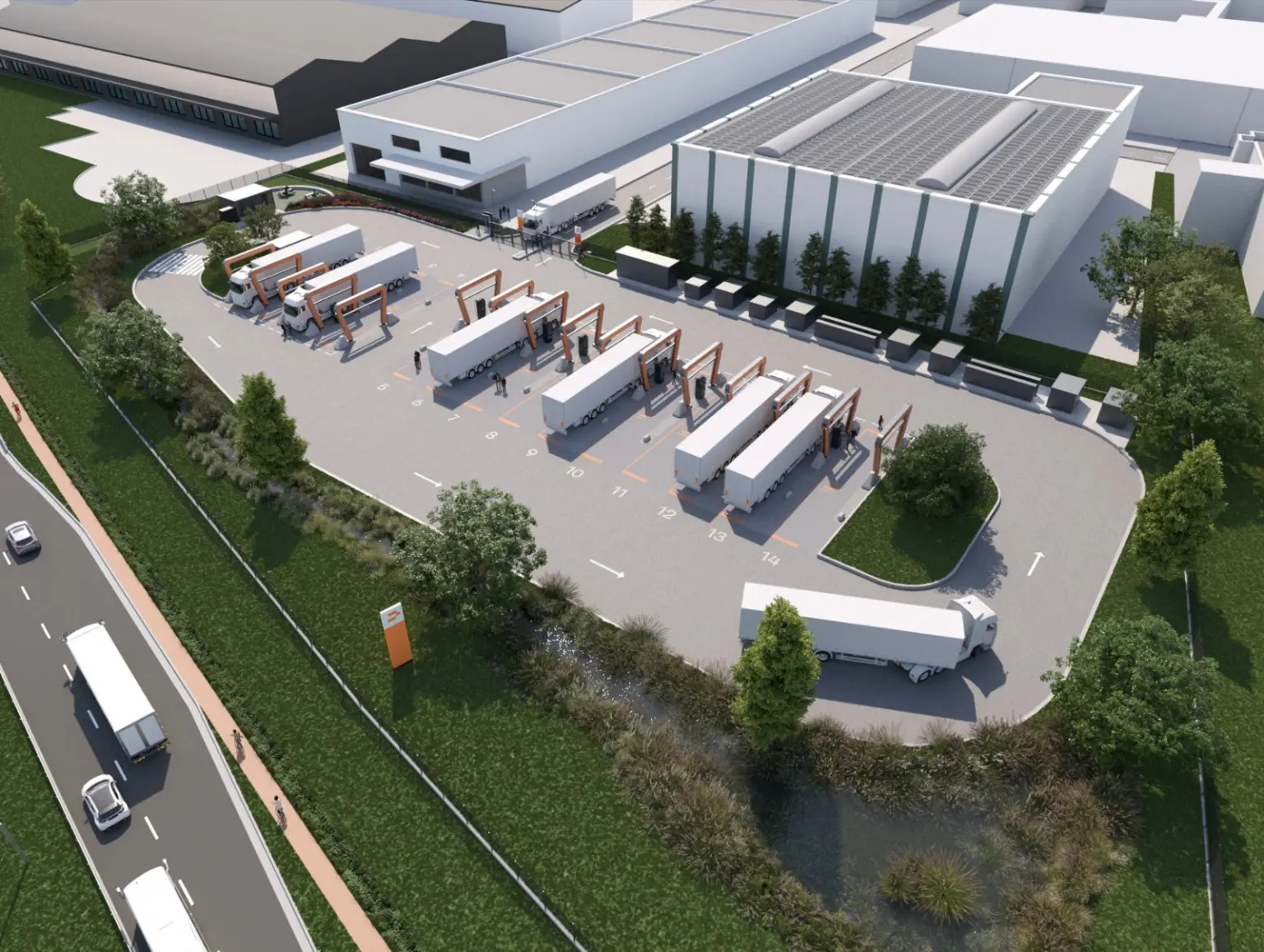
Construction has officially started on the Milence charging hub in Temse, Belgium, marking a major milestone for Pilot 2 of the MACBETH project.
The Temse site is one of the two pilot sites being developed within MACBETH – Multipoint megAwatt Charging for Battery Electric Truck Hubs. Through the project, Pilot 2 will demonstrate the deployment and operation of a user-centric high-power charging hub for electric heavy-duty vehicles, generating practical insights into the implementation of Megawatt Charging System (MCS) infrastructure.
Located at Winninglaan 3 in Temse, the hub is strategically positioned along the North Sea–Mediterranean TEN-T corridor, strengthening electric freight connectivity between the major logistics and port regions of Antwerp and Ghent.
From planning to implementation
With construction now underway, MACBETH Pilot 2 is moving from planning and design towards real-world implementation.
The pilot will provide a practical environment to test and demonstrate next-generation charging technologies for heavy-duty electric transport. Its development will also contribute to MACBETH’s wider work on the deployment of multipoint megawatt charging hubs, helping identify the technical, operational and user requirements needed to support the large-scale rollout of high-power charging infrastructure across Europe.
A hybrid MCS and CCS charging hub
The Temse hub will feature a hybrid charging configuration combining Megawatt Charging System (MCS) and Combined Charging System (CCS) technologies.
According to Milence, the completed site will include eight charging bays. Four of these will be equipped with hybrid MCS/CCS chargers, while the remaining bays will provide CCS charging. The site is planned to include four MCS charging points with a capacity of up to 1,100 kW each, alongside CCS charging infrastructure delivering up to 400 kW.
This combination will enable the hub to accommodate both current and future generations of electric trucks. While CCS technology continues to serve many heavy-duty electric vehicles currently on the road, MCS is designed to support significantly higher charging capacities and the requirements of long-distance and energy-intensive freight operations.
Supporting the needs of electric truck drivers
Beyond charging infrastructure, the hub is also designed around the operational needs of professional drivers. The site will include secure parking and facilities such as toilets, showers and vending machines.
This reflects an important aspect of MACBETH Pilot 2: the development of future charging hubs is not limited to the installation of chargers. The pilot will also explore how charging infrastructure can be integrated into the wider operational environment of road freight transport and designed around the needs of drivers and fleet operators.
Generating lessons for the future of megawatt charging
As MACBETH Pilot 2 takes shape, the Temse site will provide valuable insights into the deployment and operation of high-power charging infrastructure in a real-world freight transport setting.
The lessons generated through the pilot will contribute to MACBETH’s wider objective of supporting the future rollout of Megawatt Charging Systems across Europe. By addressing technical, operational and user-related aspects of charging hub deployment, the project aims to help pave the way for a reliable and scalable charging network capable of supporting the transition to zero-emission heavy-duty road transport.
With construction now underway, MACBETH Pilot 2 has reached an important new stage. The project will continue to follow the development of the Temse hub and share further updates as the site progresses towards operation.