

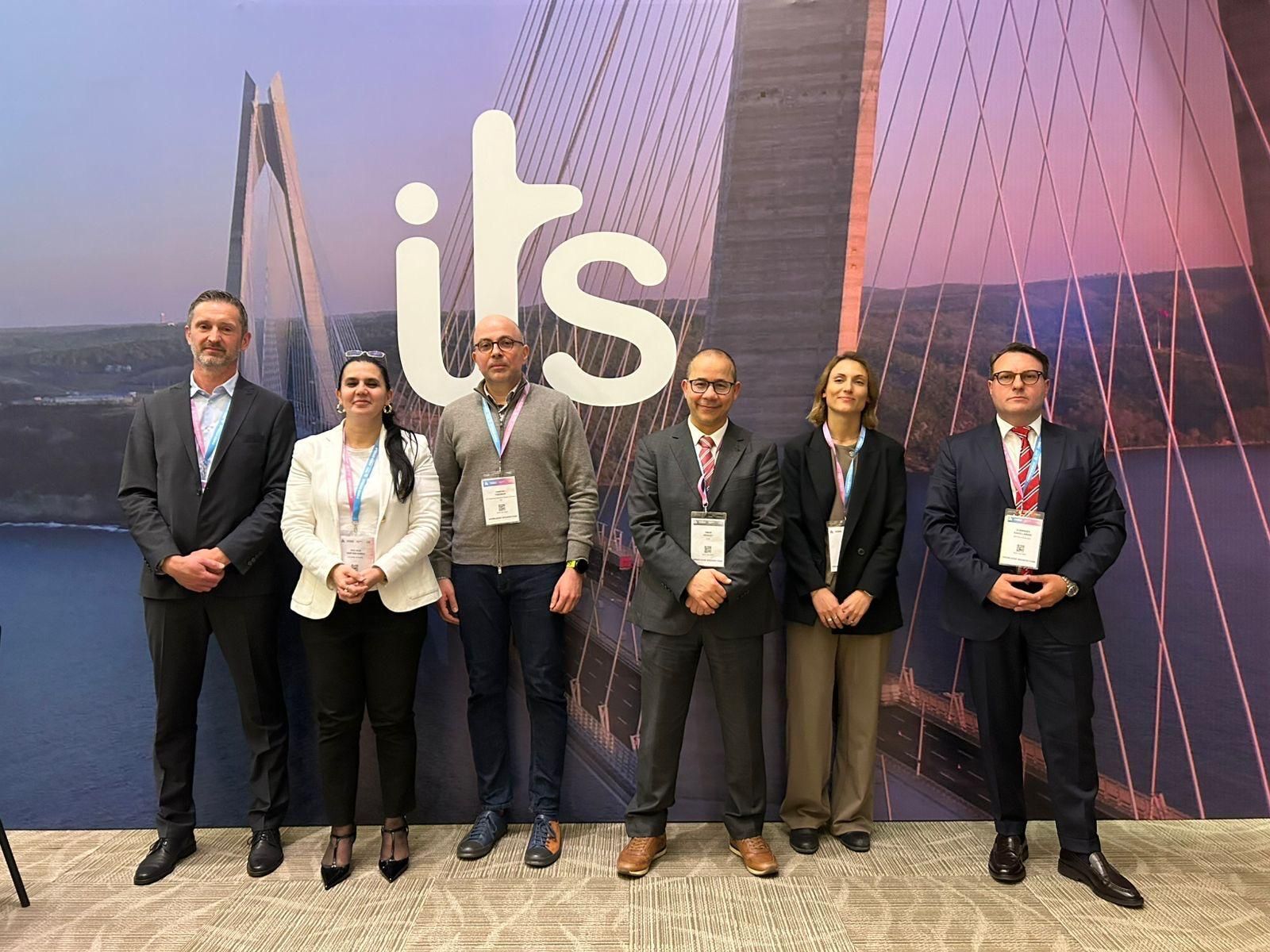
MACBETH joined the European Intelligent Transport Systems community in Istanbul for the ITS European Congress 2026, contributing to the discussion on the future of zero-emission long-haul logistics and megawatt charging infrastructure.
The Congress brought together stakeholders from across the mobility sector to explore the technologies, research and collaborations shaping the future of transport.
As part of the programme, MACBETH participated in the Special Interest Session, “Recent advances in zero-emission trucks deployment and megawatt charging infrastructure development”, alongside several projects from the AEVETO cluster working on Europe’s transition towards zero-emission heavy-duty transport.
Learning from real-world deployment
The electrification of long-haul freight is increasingly moving beyond the question of whether battery-electric trucks can work.
Across Europe, projects are demonstrating new vehicle technologies, testing infrastructure solutions and gathering evidence from real-world operations. However, moving from demonstrations to widespread deployment remains a major challenge. The session in Istanbul brought together MACBETH, FLEXMCS, EMPOWER, ZEFES and ESCALATE to explore the latest developments and lessons emerging from this work.
The discussion covered a broad range of innovations, from demonstrations of zero-emission heavy-duty vehicles to infrastructure pilots designed to support the transition towards cleaner freight transport. Together, the projects represented different parts of the same challenge: creating a transport system in which zero-emission trucks can operate reliably and efficiently across Europe.
The role of megawatt charging
A key focus of the session was the development of Megawatt Charging Systems.
For long-haul battery-electric trucks, charging infrastructure will need to deliver significantly higher power while fitting into demanding operational schedules. This creates new requirements for infrastructure design, grid integration and the coordination of charging with logistics operations.
The discussion explored several of the issues that will shape future MCS deployment, including use cases for megawatt charging, interoperability, standardisation and the integration of high-power charging into real-world logistics operations.
MACBETH contributed to this discussion by bringing stakeholder perspectives into the wider conversation.
Understanding what is needed to scale
Representing MACBETH, Alice Scotti from ALICE shared insights into stakeholder perspectives and the practical challenges associated with scaling up MCS infrastructure and enabling efficient battery-electric truck operations.
The contribution highlighted that the transition towards large-scale deployment requires more than the availability of new charging technology.
For infrastructure to support long-haul operations effectively, users need confidence that charging will be available and reliable. Operators need solutions that can be integrated into their existing workflows, while infrastructure providers and energy stakeholders need to coordinate the development of systems capable of meeting future demand.
These interconnected challenges demonstrated why the transition towards zero-emission freight cannot be addressed by individual technologies in isolation.
The session was moderated by Yancho Todorov from VTT and brought together perspectives from the different projects, creating an opportunity to examine how their work can contribute to a shared European charging ecosystem.
From pilots to a European ecosystem
One of the central themes emerging from the discussion was how Europe can build on the knowledge generated through individual demonstrations.
Pilot projects provide essential evidence on how new vehicles and infrastructure perform in practice. They can help identify technical limitations, operational challenges and barriers that may not emerge in laboratory environments. The next challenge is to use these lessons to support deployment at a larger scale.
For MACBETH, this means considering the full ecosystem around megawatt charging. Charging hubs need to connect with vehicle technology, grid infrastructure, digital tools and logistics operations. Standards and interoperability need to support cross-border operations, while stakeholder needs must continue to inform the development of future solutions.
The discussions in Istanbul reinforced the importance of collaboration between projects, industry and other stakeholders in addressing these interconnected challenges.
MACBETH’s participation in the ITS European Congress provided an opportunity to share its work, exchange experiences with fellow European initiatives and contribute to the ongoing conversation on how megawatt charging can move from pilot projects towards reliable, interoperable and widely available infrastructure.