

Scaling Megawatt Charging Systems (MCS) for electric heavy-duty transport requires more than technological progress. It calls for coordinated action across the transport, energy and infrastructure sectors, taking into account the different needs and challenges of the stakeholders involved.
Experts from the MACBETH project consortium, alongside researchers from ALICE and Lindholmen Science Park, have contributed to a new open-access publication examining the stakeholder perspectives shaping the development and deployment of Megawatt Charging Systems (MCS) for heavy-duty transport in Europe. The authors bring together expertise from across the European MCS ecosystem to explore the conditions, challenges and opportunities for scaling this technology.
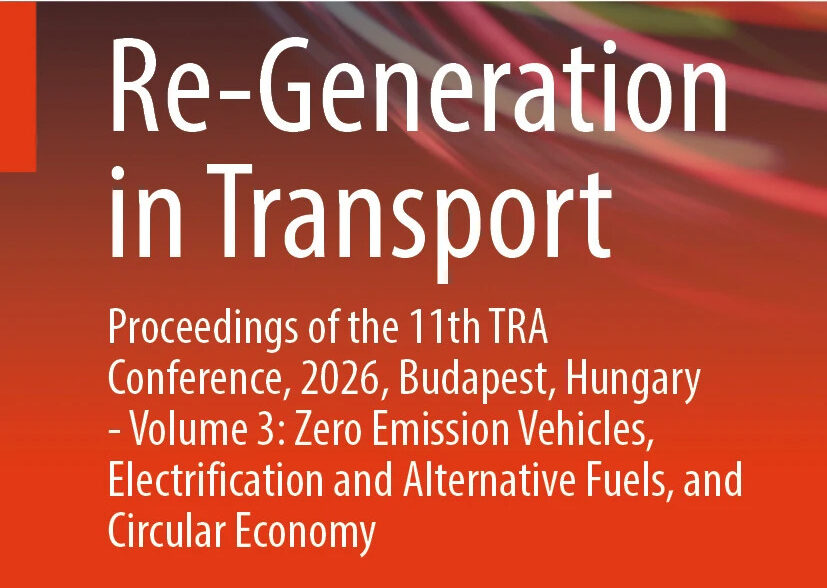
The publication brings together the expertise of Alice Scotti, Khalis Sinaga and Stefanie Van Damme (ALICE); Thomas Geury, Ben Kraaijenhagen and Omar Hegazy (MOBI-EPOWERS, Vrije Universiteit Brussel and Flanders Make); Gunnar Ohlin and Johanna Odbratt (Lindholmen Science Park); and Yancho Todorov and Mikko Pihlatie (VTT Technical Research Centre of Finland). Published in Springer’s Lecture Notes in Mobility as part of the TRA Conference 2026 proceedings, the study draws on surveys and interviews with stakeholders across the MCS value chain. As part of this research, MACBETH contributed consultations with 65 organisations, gathering insights into the technical, operational and regulatory factors influencing the deployment of megawatt charging infrastructure across Europe.
Understanding the challenges across the MCS ecosystem
The findings highlight that the transition towards megawatt charging involves a diverse range of stakeholders, including truck manufacturers, fleet and logistics operators, charging point operators, electricity grid operators, technology providers and public authorities. Their priorities and requirements are not always aligned, making collaboration essential to move from individual demonstrations towards wider deployment.
Among the main challenges identified are the availability of sufficient grid capacity, lengthy connection and permitting processes, interoperability between charging systems, infrastructure investment costs and the uncertainty surrounding early market demand.
The consultations also reveal differences in deployment readiness across Europe. While some regions are advancing towards megawatt-scale infrastructure, others continue to face constraints related to grid capacity, land availability, permitting and the limited number of MCS-compatible vehicles.
From technological development to large-scale deployment
The study underlines the importance of addressing these challenges through coordinated planning and targeted support. Reliable grid connections, harmonised standards, transparent pricing, digital integration and reservation systems will all play an important role in creating an effective charging network for electric heavy-duty vehicles.
It also highlights the need for deployment strategies that reflect regional differences in market maturity and infrastructure readiness, rather than applying a uniform approach across all European countries.
For MACBETH, these findings reinforce the importance of developing interoperable, user-centric and scalable Megawatt Charging Systems. Through its work on multipoint megawatt charging solutions for battery-electric truck hubs, the project contributes to the wider European effort to make high-power charging infrastructure a practical reality for heavy-duty transport.
As Europe moves towards the next stage of electric truck deployment, understanding the perspectives of the stakeholders involved will be essential to building an MCS ecosystem that works not only technically, but also operationally and economically.
Read the publication
The full open-access chapter is available through Springer:
The publication acknowledges support from the European Commission’s Horizon Europe programme through MACBETH (Grant Agreement No. 101192466) and FLEXMCS (Grant Agreement No. 101192657).
#MACBETH #MegawattCharging #MCS #ElectricTrucks #HeavyDutyTransport #ZeroEmissionTransport